First 60 Minutes After a Flood: An Emergency Guide
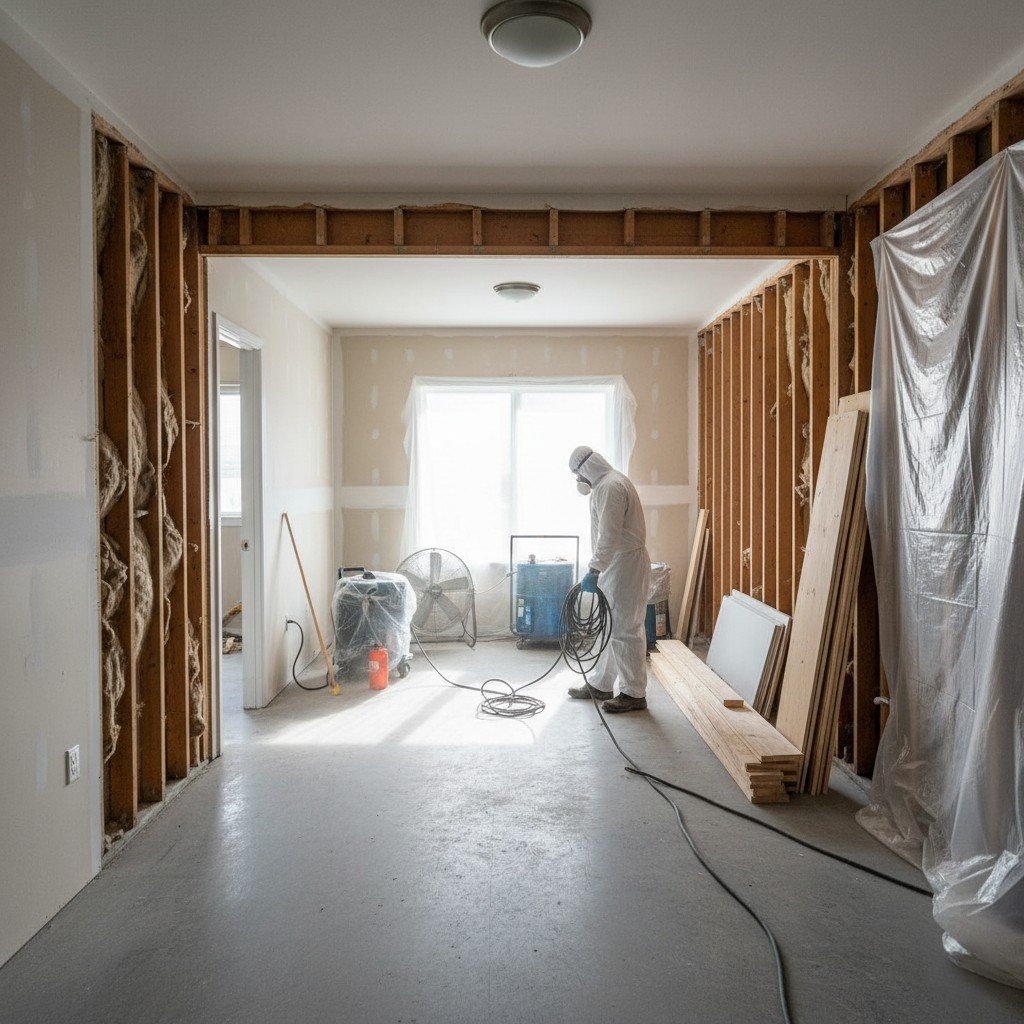
A flood in your home or business is a race against the clock. Whether it’s a burst pipe, a heavy storm, or a sewage backup, the decisions you make in the first hour—the “Golden Hour”—will determine the extent of the damage and the cost of the restoration. At Absolute Cleaning, we provide 24/7 emergency response, but what you do before we arrive is crucial.
Here is your step-by-step guide to navigating the first 60 minutes of a water emergency.
Minutes 1–10: Safety and Source Control
Your priority is life safety. Water and electricity are a lethal combination.
- Kill the Power: If you can reach the breaker box without stepping into standing water, turn off the electricity to the affected areas. If the box is in a flooded basement, stay away and wait for an electrician or the fire department.
- Stop the Flow: If the flood is caused by a plumbing failure (like a burst washing machine hose or a frozen pipe), turn off the main water shut-off valve immediately. Every second the water flows adds gallons to the extraction process.
- Identify the Category: Is the water “White” (tap water), “Grey” (dishwasher/washing machine), or “Black” (sewage or groundwater)? If it is Black water, evacuate immediately. The bacterial count is too high for DIY intervention; you need professional PPE to be in the space.
Minutes 11–30: Communication and Documentation
Once the scene is stable, you need to start the paper trail.
- Call Absolute Cleaning: Professional extraction is needed immediately. Mold spores can begin to colonize in as little as 24 to 48 hours. The sooner the industrial dehumidifiers start, the lower the chance of structural rot.
- Document Everything: Before you move anything, take photos and videos of the standing water and the damaged items. This is vital for your insurance claim. Capture the source of the leak if possible.
- Contact Insurance: Call your agent to start the claim. Let them know Absolute Cleaning is on the way. Most policies require you to take “reasonable steps” to mitigate further damage—which is exactly what you are doing.
Minutes 31–50: Mitigation and Asset Protection
If it is safe to enter the area, begin “triage” on your belongings.
- The “Aluminum Foil” Trick: Move furniture out of the wet area. If the furniture is too heavy to move, place squares of aluminum foil or plastic “coasters” under the legs. This prevents “wicking,” where wood stain from the furniture legs bleeds into the carpet, causing permanent staining.
- Lift the Draperies: Pin up any curtains or furniture skirts that are touching the wet floor.
- Remove “Bleeders”: Pick up area rugs, books, magazines, or colorful fabrics that are on wet floors. These items often have dyes that will permanently “bleed” into your flooring within minutes of getting wet.
- Protect High-Value Items: Prioritize moving electronics, sensitive documents, and family heirlooms to a dry, climate-controlled room.
Minutes 51–60: Airflow Management
Do not attempt to use a standard household vacuum to suck up water. You will likely electrocute yourself or ruin the machine.
- Open Windows (If Humidity is Low): If it’s a dry day, open windows to begin the evaporation process. If it’s raining or humid outside, keep them closed to avoid adding more moisture to the air.
- Set the AC: Turn your air conditioning to a low temperature. Cold air holds less moisture than warm air, and the AC unit acts as a natural (though small) dehumidifier.
- Clear the Path: Ensure the driveway and entryways are clear for the Absolute Cleaning restoration truck. Our team will need to run heavy hoses from the truck into the building.
What NOT To Do
- Don’t use a Shop-Vac for large floods: They lack the power to pull water from the padding beneath the carpet.
- Don’t walk on wet carpet more than necessary: This pushes water deeper into the subfloor and damages the carpet backing.
- Don’t turn on ceiling fans if the ceiling is wet: If the leak came from above, the weight of the water combined with the vibration of the fan could cause a ceiling collapse.
The Bottom Line: You are not alone. Absolute Cleaning’s emergency team is equipped with thermal imaging cameras to find “hidden” water behind walls and industrial-strength extractors to get the moisture out fast. Stay calm, stay safe, and let the professionals handle the restoration.